Fawning Is the Fourth Stress Response, and It Runs on Serotonin
4 September 2026 · Elwin Robinson
The Executive Summary
- 1Fawning is a fourth stress response alongside fight, flight and freeze: going agreeable and submissive around someone you perceive as more powerful.
- 2A genuinely relaxed person would notice a power gap and feel nothing. The performing only fires when there's fear underneath.
- 3Fawning appears to sit on the serotonin axis, not the adrenaline axis, which is one reason to question serotonin as the simple happiness chemical.
- 4The same axis correlates with narcissism and psychopathy. Correlates, not causes. It is a lens for reading behavior, never a label for yourself or anyone else.
Here's a pattern you've almost certainly done, probably without ever giving it a name. You're around someone who feels more powerful than you - a boss, someone with status in the room, someone whose approval you want - and you go soft. Agreeable. You flatter them a little. You defer. Most people, if they thought about it at all, would file that under fight, flight, or freeze. Except it's really none of those. It's a fourth thing, and it barely ever gets named.
It's the fawn response. And the thing is, it's not really a personality trait at all. It's your nervous system sitting in a stress state, running on a chemistry most people would never guess.
What is the fawn response?
Fawning is people-pleasing, looked at through the lens of your nervous system. Around someone you read as higher status, or more powerful than you, you get agreeable. You flatter. You soften yourself and defer. On the surface it can look like warmth, or just good manners.
The tell is who it shows up around, and why. It's keyed specifically to a power difference you can feel, and it's a way of managing the threat that difference stirs up in you. That's what makes it a stress response, and not just a nice way of being.
Fight, flight, freeze, fawn
Line it up next to the other three and it fits. Fight and flight are the loud ones - you confront, or you run. Freeze is going still. Fawn is the social version of the same thing. Instead of fighting the more powerful person, or running from them, you handle them by keeping them happy. All four are just ways a stressed nervous system tries to get itself safe. Fawn is the one that looks like kindness, which is probably why it went unnamed for so long.
Is people-pleasing a trauma response?
Here's the part I find really clarifying. Say you were genuinely relaxed and secure, and you noticed that someone in the room had more status or power than you. You'd clock it and feel basically nothing. It'd be a neutral fact, like noticing that someone's taller than you.
As I've put it before, "The only reason you're going to do all that stuff is because you're stressed." The flattering, the deferring, the shrinking yourself down - none of that comes out of a calm person. It only fires when there's some fear underneath. So it's not really the fawning that's the issue. It's the stress underneath it, and the fawning is just what that stress does when there are other people in the room. That reframe matters, because it moves you off "why am I like this" and onto "what am I actually afraid of here" - which, I'd say, is a much more useful question to be asking.
Is serotonin really the happiness chemical?
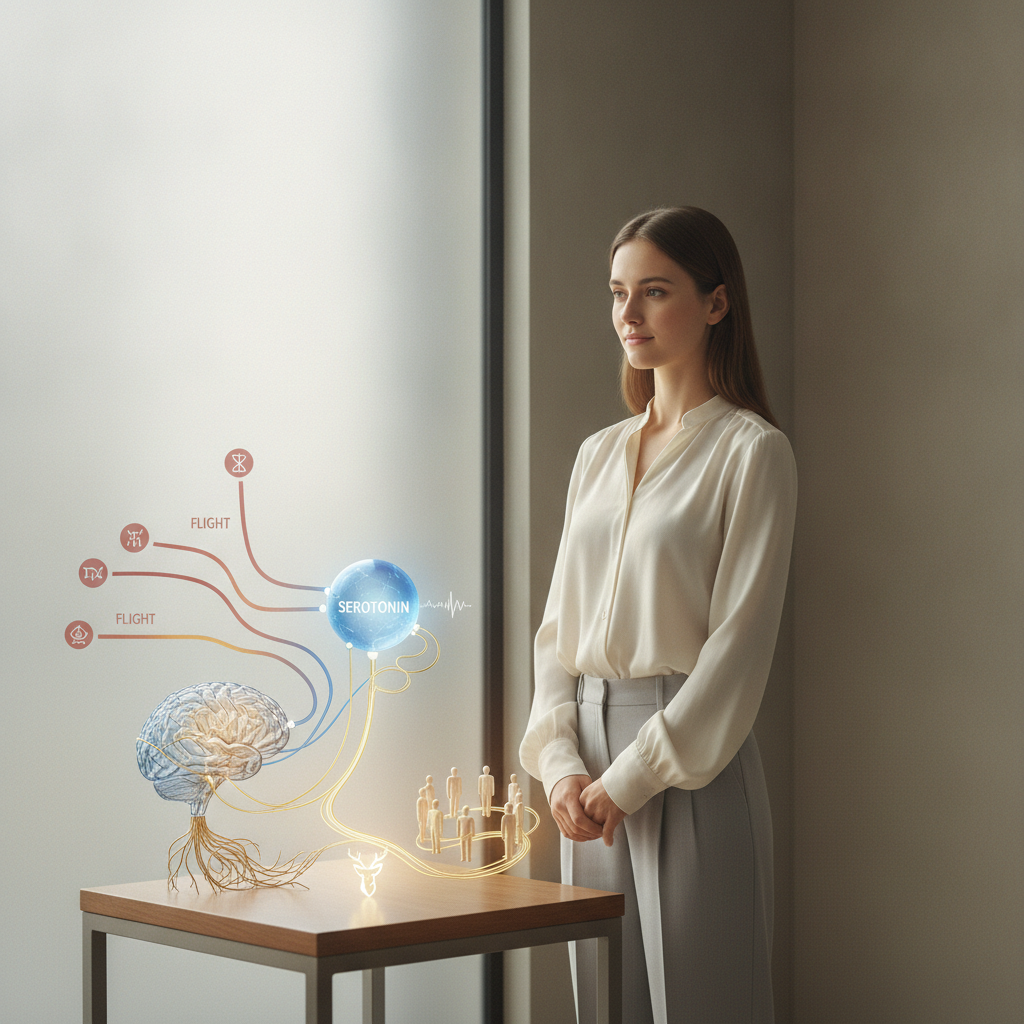
Now here's the part that tends to catch people off guard. Fight and flight run mostly on the adrenaline axis - the obvious stress chemistry, the racing heart. Fawning, the way I frame it, sits more on the serotonin axis instead.
That's worth pausing on, because serotonin has been sold to us as the happiness chemical, the thing you're supposed to want more of. But if the appeasing, submissive, keep-the-powerful-person-happy response is running on the serotonin axis, then serotonin starts to look less like plain contentment and more like a status-and-safety chemistry. I'd hold that as a way of reading it rather than a settled fact - I could be wrong on the details - but it's a genuinely different lens than "serotonin equals happy."
Serotonin and narcissism
This is the last beat, and I want to keep it exactly as careful as it needs to be. That same serotonin axis the fawning response sits on is one I've also connected to narcissism and psychopathy. Notice the word I'm using: connected, as in correlated. Not caused. It's an association along the same axis, and it's part of why I keep arguing that serotonin isn't the clean happiness chemical it's been marketed as.
So let me be very clear about what this does and doesn't mean. It does not mean that if you people-please, you're a secret narcissist. That would be taking a correlation and turning it into a diagnosis of you, and that's simply not what I'm saying. Fawning and narcissism can share an axis without one turning you into the other. Hold each of these as its own separate observation, sitting near the others on the same bit of chemical territory, rather than one big claim that squashes them all together.
What to do with this
A few things worth taking away, each kept in its own lane:
- There's a fourth stress response - fawning - sitting alongside fight, flight, and freeze. It looks like kindness, and it reads as people-pleasing.
- A genuinely relaxed person notices a power gap and feels nothing. The performing only kicks in when there's stress underneath. So the fawning is pointing at fear, not at some flaw in your character.
- Fawning seems to sit on the serotonin axis rather than the adrenaline one, which is one good reason to question the "serotonin is the happiness chemical" story.
- That same axis correlates with narcissism and psychopathy. And that word, correlates, is doing a lot of work - I mean it as a correlation, never as a label to pin on yourself or on anyone else.
If you want to see where your own stress pattern actually sits, the free assessment at hormetics.health is the simplest place to start. It only takes a few minutes, and it points you toward the pattern that fits you rather than some generic answer. And if fawning is a lifelong pattern you genuinely want help unwinding, that's the kind of work I do one to one at elwinrobinson.com.
This is educational, not a diagnosis or mental-health treatment. If you're struggling, please talk to a qualified professional.