Do You Really Need Superfoods to Be Well Nourished?
17 October 2026 · Elwin Robinson
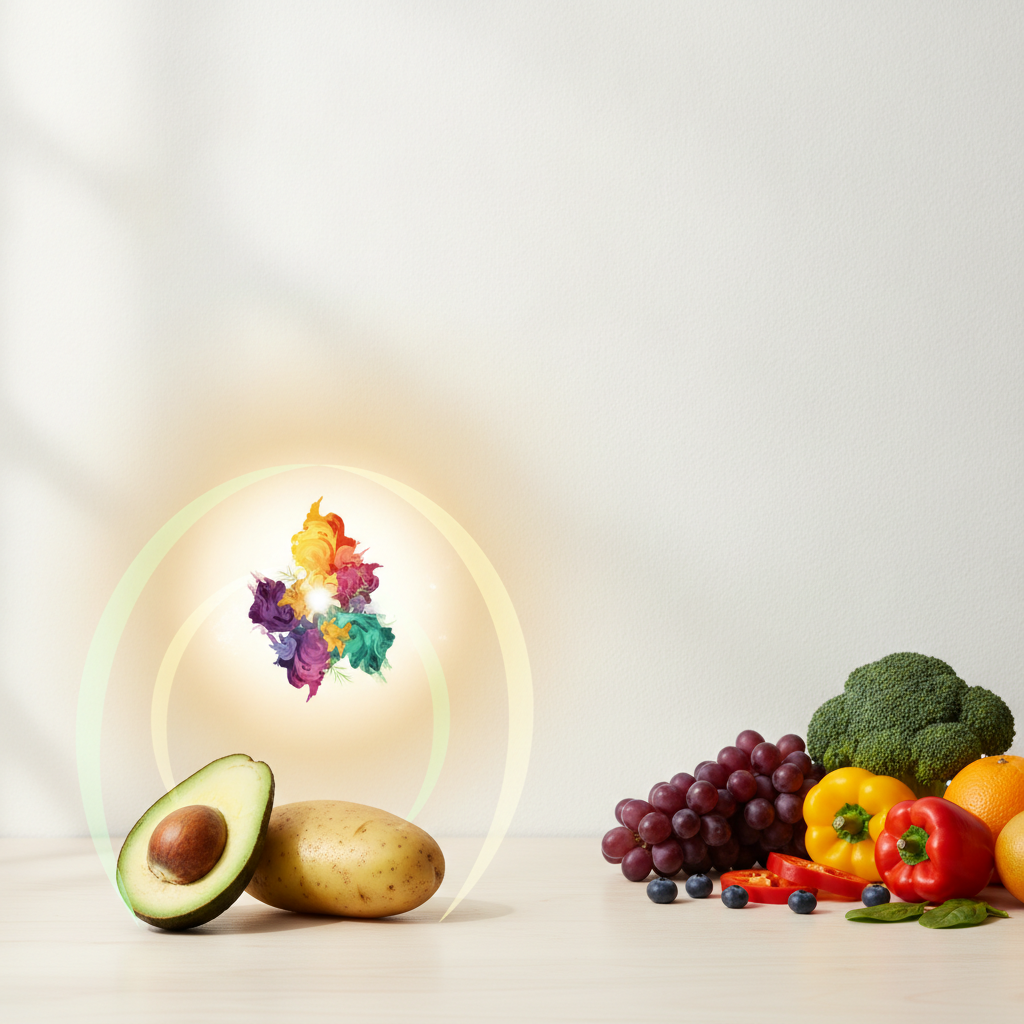
If you take your health seriously, have you ever spent real money on superfoods? Maybe it was rare berries, adaptogens, or the brightly colored foods you've been told are full of healing compounds.
I understand the pull, because I fell for the same idea earlier in my career. I believed all the usual propaganda that the most nutrient-dense foods, the so-called superfoods, were things like broccoli and blueberries.
These days my own plate is about the most basic kind of meal there is: meat, potato, bread and cheese. I know that sounds like the least healthy diet around.
So let me walk you through why plain food can still carry most of your nourishment, and what the colorful compounds in superfoods actually do.
What I actually eat, and why it sounds so unhealthy
Most of my protein comes from goat and sheep cheese and from beef, and with the beef it's always collagen and sometimes muscle meat. Most of my carbohydrate comes from starch, mainly potato and bread. I know plenty of people think fruit is the better carb, and they may be right. All I know is that, for me, fructose doesn't agree with me the way starch does. Gluten and soy are the only two real intolerances I've found in myself. I have vegetables some of the time.
And no, I'm not a carnivore. Over half of what I eat is plants, because I'm a fan of carbohydrates.
It's plain food, but I go for the best version of each part. The cheese is organic goat and sheep cheese, the meat is organic, 100% grass-fed ruminant meat, and the bread is gluten-free sourdough.
I eat this way because I'm still trying to optimize, so I'm not having anything that I feel stresses my system. And I honestly don't feel like I'm lacking anything on it.
That said, just because I eat it doesn't mean it's the right thing for you. It's valid for me, but obviously not for everyone, and there are people it disagrees with.
Why superfoods feel like the healthy choice
Each of the popular diet camps captures something true, and then overshoots it into dogma. The carnivore people are right that meat is extraordinarily nutrient-dense and that many people thrive mostly on animal foods, but they're wrong that it's optimal for everyone. When people genuinely do well on keto, paleo, vegan or carnivore, they report strikingly similar results: they feel better, they have more energy, their digestion improves and their thinking clears. That's because they've all moved away from the standard diet of seed oils, refined carbohydrate and hyperprocessed food, and started paying attention. Being intentional matters more than the particular ideology.
Superfood thinking comes out of that same attention, and on the surface it sounds reasonable. It's the classic advice to eat the rainbow, a bit of this and a bit of that, with every bright color on your plate meant to be doing you good.
The compounds people point to are things like polyphenols, bioflavonoids and triterpenes. These are the plant compounds that get talked about as the reason certain foods count as superfoods.
Underneath that sits a bigger belief, that you need a long list of different foods to be well nourished. What makes eating well feel hard in the wealthy world is mostly the belief that variety is mandatory.
The potato and beef thought experiment
Let me give you a thought experiment I use to prove a single point about nutrient density. It's not a dietary prescription, and it's not medical advice. I'm not telling you to eat only potatoes and beef, and some people would find that monotonous or develop an aversion to it.
Imagine a roughly 3,000-calorie day of about two pounds of beef and three pounds of potatoes. That covers most of your micronutrient needs surprisingly well.
You get a complete amino acid profile from the beef, and the B vitamins in adequate amounts. You get potassium, magnesium, zinc, iron, manganese, phosphorus and copper. The magnesium comes in at over 100 percent of the daily target, which is more than most people get from anything. All your fiber comes from the potato skins, and the omega-3 to omega-6 ratio is reasonable, depending on the quality of the beef.
The ones that fall short are folate, calcium and vitamin E, and you'd add a little variety to cover those. If you want the full nutrient breakdown, it's in my book The Nutrient Gap, which you'll find at rejuvenateblueprint.com.
Those figures are for beef and potatoes only, so they aren't a measure of my own plate, which has cheese and bread on it too.
I once watched a client's face change as I showed her this. She'd been spending hundreds of dollars a month on exotic superfoods, adaptogens, rare berries, the whole collection. Within minutes she realized she'd been chasing complexity while two ordinary foods were quietly meeting most of her actual needs. The relief on her face was striking.
What the colorful compounds in superfoods actually do
When I talk about nutrients, I mean the building blocks your body is actually made out of. By that measure, spinach is actually not bad per calorie, because it's so low in calories. But you can only fit so much in before you feel full. Stomach capacity for stomach capacity, you're absolutely going to get more nutrition from beef, lamb, oysters, salmon or sardines.
Polyphenols, bioflavonoids and triterpenes aren't building blocks of your body. I could wave a magic wand over you right now and make every polyphenol in your body disappear, and you'd be fine.
On the bright colors themselves, I'd say I go along with the carnivore crowd and Dr. Garrett Smith: a lot of the bright colors in foods are plant defense chemicals rather than wonderful healing substances. The idea that a strong color is good for you isn't proven, even though people act as if it is. There are exceptions, and I use some of them, but I treat them as medicines rather than foods. In fact, I think the fairest way to classify most of these plant compounds, even though they get called phytonutrients, is that they're more like medicines.
There's some truth to the carnivore point that some people do get better when they remove all those plant compounds from their diet. There's also truth to the idea that polyphenols have some benefits. The most compelling one to me is that they feed certain organisms in your digestive tract, in your microbiome, rather than feeding you directly.
There may be specific organisms inside you, and not inside me, that really enjoy brightly colored compounds like polyphenols or flavonoids. So maybe you love blueberries or tomatoes and they agree with you, and that's fine too. This really is quite an individual thing.
What to do instead of chasing superfoods
People come into my practice convinced there's a universal diet that's right for everyone. There isn't. The specific ratios of protein, carbohydrate and fat should be set by your genetics, your digestion and your current state, not by a flag you've decided to fly.
A lot of diet is about working out what isn't working for you and cutting that out, so start there.
If you eat meat, have the good version, such as 100% grass-fed or 100% pasture-raised. Vegetables should be part of your diet, but not your cornerstone.
If your plate leans heavily on beef and potatoes, keep in mind the gaps that showed up in the thought experiment, and cover them with a little variety. Folate, for one, is something you'll generally find more of in plant foods.
Nutrient density isn't about complexity. You don't need twenty foods to be well nourished, just foods that carry micronutrients efficiently and then enough variety on top of that to cover the gaps.